
The origins of a wedding buttonhole
I thought I’d look into the tradition of wearing flowers as buttonholes also known as boutonnieres,(mainly in America) they have a long and rich history that spans various cultures and traditions. The practice dates back to ancient civilisations, where people would wear flowers for symbolic, religious, or medicinal purposes.
Romans would wear flowers as a symbol of victory during celebrations and ceremonies. In medieval Europe, herbs and flowers were worn for both practical and symbolic reasons. People believed that certain flowers could ward off evil spirits and protect against diseases. Buttonholes were also worn during weddings, with the groom and his groomsmen adorning their attire with flowers as a symbol of fertility and good luck. The Renaissance era saw a resurgence of interest in classical traditions, and the use of flowers as personal adornments continued. Flowers were often worn during festivals, weddings, and other celebrations. The Victorians invented the language of flowers, or “floriography,” which became popular. Each flower was assigned a specific meaning, allowing individuals to convey sentiments without words. I would hope they could get hold of the flowers they needed to convey the right message, they may have had to wait a whole year for some flowers to bloom again! In the early 20th century, flower buttonholes became a common accessory for men’s formal wear, especially during weddings and special events

Today, wearing flowers as buttonholes is still a popular tradition, especially at formal events like weddings and other celebrations. The tradition endures as a beautiful and symbolic way to add a touch of nature and elegance to formal attire.
Buttonholes are a romantic way to make the key wedding party members feel included and special. They distinguish the main wedding party from the rest of the guests, making it easier for the photographer, planner, staff or guests to find them if they need them.
Who wears a buttonhole at a wedding?
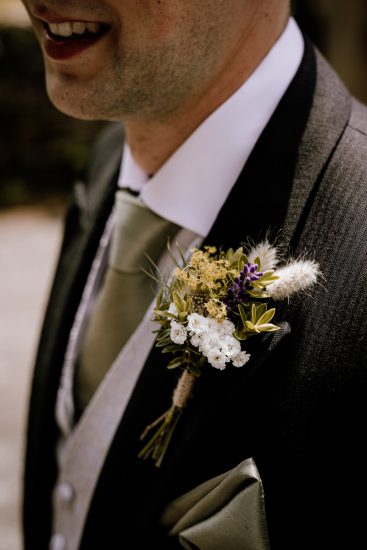
Traditionally the men in your main wedding party wear buttonholes, some religions and cultures may vary from this, however this is what we suggest to our couples.
*The Groom/Grooms – Your buttonholes will be slightly more elaborate from the rest of the party. For same sex weddings I like to suggest something unique and different to each other. However this is entirely up to you and the style of your wedding.
*The Best Man/Men
*Fathers of the Bride/Groom
*Ushers, Groomsmen, Pageboys, Brides men, Attendants
*Grandfathers are lovely to include too.


The design of your buttonhole will depend on your wedding theme and the time of year. If you are having a more formal wedding you may want all your buttonholes to be the same colour. If however you are planning a festival style wedding then you might want them to be all different colours for a more relaxed style wedding.
Our dried flower buttonholes are also very popular and these can be kept as a lovely memento of your wedding day.


Where do you pin on your buttonhole?
The proper placement for a gentleman’s buttonhole is on his left hand side of his suit lapel.
How to put a buttonhole onto a suit
1. Hold the buttonhole by the stems with the flowers at the top, the back of the buttonhole will be more flat with the flowers facing the front.
2. Find the mid section of the lapel and place the buttonhole flat onto it making sure you put the back of the buttonhole against your jacket.
3. Take your pearl headed pin and and start from the underside of your lapel, push the pin into the fabric through the stems and back out again the other side.
4. Repeat step 3 with the other pin to make sure it’s secure and prevent it from dropping or spinning round.
If you need a little extra guidance then please watch my video below on how to pin a buttonhole onto a suit jacket.
